
The efficiency of Ghana’s shipping and logistics sector depends not only on the infrastructure at the ports but also on the conduct of the various players whose activities determine how goods move through the trade chain. From importers and exporters to shipping lines, freight forwarders and other service providers, each stakeholder has a responsibility to ensure that the country’s commercial shipping sector operates within an environment of fairness, professionalism and accountability.
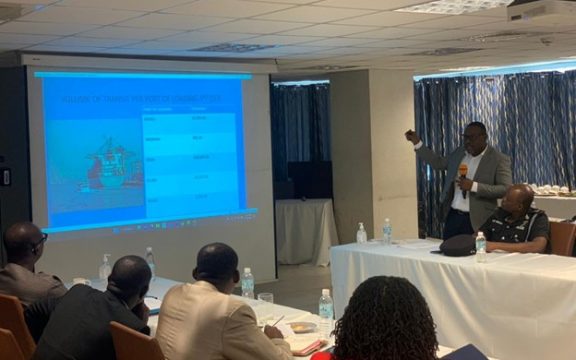
It was against this background that Ghana Shippers’ Authority (GSA) held an engagement with Bronze Shippers and Trade Associations within the shipping and logistics industry to discuss issues that affect their operations, espouse ongoing regulatory interventions and seek their cooperation to address persistent challenges within the sector.
 The meeting, chaired by Mr. Fred Asiedu-Dartey, highlighted the respective responsibilities of industry players, particularly importers and exporters, whom he described as the drivers of the Ghanaian economy. He stressed that their contribution to trade, revenue generation and employment made it important for their interests to be protected and their concerns to be addressed.
Mr. Asiedu-Dartey disclosed that GSA had developed Standard Operating Procedures (SOPs) to address operational challenges identified across the country’s ports and establish clear standards to guide the activities of industry players. He explained that the procedures would promote professionalism and provide a basis for assessing stakeholders’ performance and holding them accountable for their responsibilities.
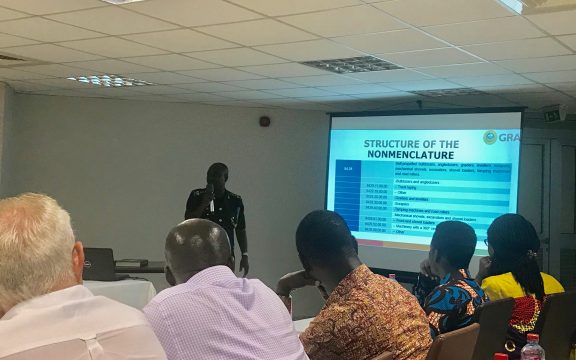
 The meeting also featured a presentation by Mr. Bassit Abdul, Technical Adviser at the Ministry of Finance, who emphasised the importance of adhering to government policy directives and supporting the Ministry’s revenue mobilisation efforts. He outlined steps being taken to strengthen revenue generation and urged industry players to align their operations with the relevant policy requirements.
He also highlighted the importance of the Letter of Commitment (LOC) in the export value chain and called on members to comply with its requirements. Compliance, he explained, was necessary to support government’s effort to improve the repatriation of export proceeds to strengthen foreign exchange management.

On the Container Administrative Charge (CAC), Mr. Asiedu-Dartey briefed participants on developments surrounding the charge and the measures GSA had taken to ensure that importers and exporters were not subjected to excessive and unfair shipping charges. He reaffirmed GSA’s commitment to protecting shippers’ interests and encouraged members to report practices that negatively affect their businesses for redress.
During the ”Question-and-Answer” session, participants raised concern about the conduct of some shipping lines and called for stronger regulatory action against operators who failed to comply with established directives. Some suggested that persistent non-compliance should attract sanctions, including possible licence revocation. The discussion highlighted the need for shippers to formally report infractions and actively support the effort to enforce compliance.
 Another key issue raised was the upcoming National Non-Tariff Barriers (NTB) Reporting Platform, which GSA is preparing to launch. Explaining the concept, Mr. Asiedu-Dartey described non-tariff barriers as obstacles other than Customs duties, that impede trade. These include unnecessary administrative procedures, delay at checkpoints, cumbersome documentation and arbitrary charges, all of which could increase the cost and time involved in the movement of goods.
He explained that the platform would provide businesses with a formal channel to report such barriers and would enable GSA to track complaints and engage relevant institutions towards resolving them. He therefore urged the associations and other participating organisations to nominate representatives for onboarding onto the platform. The representatives would serve as focal persons responsible for reporting challenges within their respective sectors and following up on their resolution.
 The engagement formed part of GSA’s broader effort to strengthen stakeholder relations, improve service delivery and promote accountability across the commercial shipping sector. It further reflects GSA’s execution of its enhanced mandate under the Ghana Shippers’ Authority Act, 2024 (Act 1122) to regulate, protect and promote the interests of players in the commercial shipping industry.
Through such engagements, GSA continues to encourage stakeholders to be actively involved in the interventions aimed at addressing industry challenges. A more efficient shipping environment requires not only effective regulation, but also, responsible service providers, informed shippers and associations who are prepared to demand compliance with established standards.