

The Ghana Shippers’ Authority (GSA) has reaffirmed its commitment to reducing the cost of doing business at Ghana’s ports while ensuring a fair and transparent regulatory environment for all players in the shipping and logistics sector.
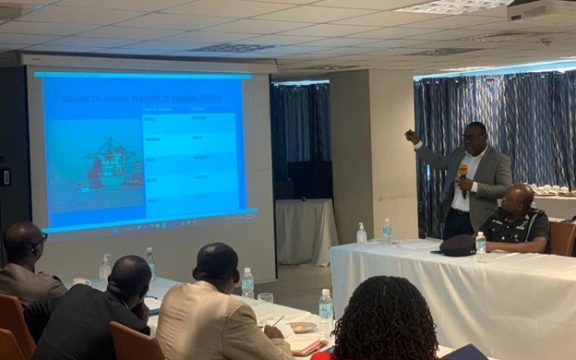
The assurance was conveyed by the Chief Executive Officer (CEO), Prof. Ransford Gyampo, in a speech delivered on his behalf by the Head of Freight and Logistics, Mr. Fred Asiedu Dartey, at the Gold and Silver Category Shippers’ Committee Meeting held on Tuesday, 16 June 2026 at the Shippers’ House in Accra.
 Addressing the gathering, Mr. Asiedu-Dartey stated that lowering avoidable costs within the cargo clearance process remains a key priority for GSA as it continues to work to improve the competitiveness of Ghana’s ports.
The meeting provided the opportunity to update the shippers on actions taken by GSA on the implementation of the Container Administrative Charge (CAC) which has generated considerable discussion within the shipping community in recent months.
 Leading discussions on the matter, a Principal Officer with the Freight and Logistics Department of GSA, Mrs. Rhodalyn Djanitey explained that the charge was introduced several decades ago when shipping lines provided critical operational services that the ports’ authorities could not provide due to capacity limitations. However, over time, significant investments and improvements at the ports of Tema and Takoradi have transformed port operations, prompting the need for a review of the charge and its relevance within the current shipping operations environment. It is in response to this need for a review to align the charge to current realities that GSA undertook comprehensive comparative research on the prevailing charge, and on the basis of the empirical findings engaged key industry stakeholders to assess fairness as well as impact on trade and port competitiveness.
 Following the review, GSA retained the container-based charge- structure, instead of a charge based on the Bill of Lading, as pertains in some countries within the West African sub-region where the charge pertains, and introduced a regulatory ceiling to ensure equity for all players in the shipping and logistics sector. The cap was set at GH¢720 per container and denominated in Ghana Cedis to improve transparency and predictability.
Mrs. Djanitey said that, GSA estimates that the measure could generate savings of approximately GH¢802.5 million for shippers and will promote a more competitive business environment at Ghana’s ports.
 During the interactive question-and-answer session which followed the presentation, participants sought clarification on various aspects of the Container Administrative Charge, including its legal basis, implementation timeline for the revised charge, the stakeholder consultations that preceded its coming into force and its anticipated impact on cargo clearance costs. Officials of GSA responded to the enquiries and provided further insight into the rationale behind the intervention, the stakeholder engagement process undertaken so far and the next steps being considered as consultations continue. The forum, thus, provided stakeholders with greater clarity on the objectives of the regulatory reforms being undertaken by GSA.
Participants expressed appreciation for the detailed presentation and the opportunity to receive firsthand explanation on pertinent matters the shipping community has been grappling with. Many indicated that the session had enhanced their understanding of the GSA’s role under its governing law, Act 1122 (2024), as well as the broader effort being made to promote transparency, fairness and cost efficiency within Ghana’s shipping and logistics sector.
 The meeting concluded on the positive note of the expression of satisfaction by participants, who also acknowledged GSA’s continued commitment to purposeful stakeholder engagement.