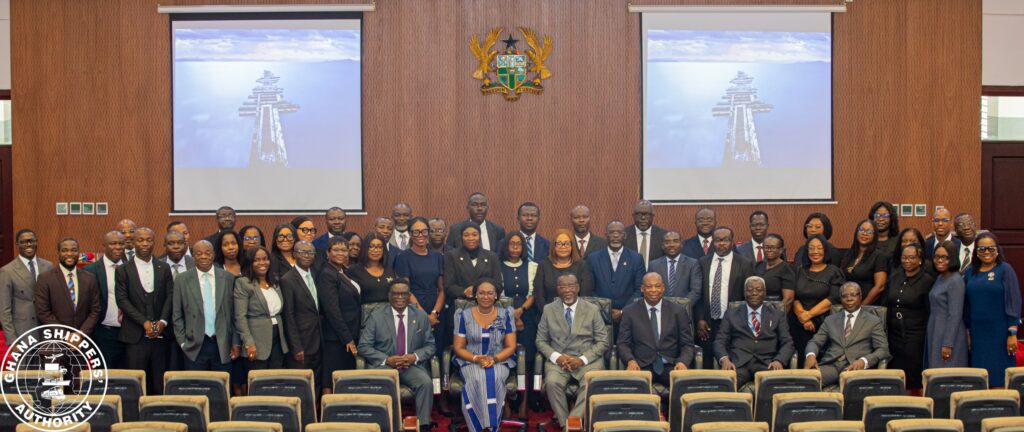


The Chief Justice, Paul Baffoe-Bonnie, has underscored the need for judges to remain firmly grounded in the Rules of Court, particularly in the evolving field of maritime law, cautioning that any lapse in mastery could be exploited by stakeholders.
He gave the caution at the opening of a Maritime Law Seminar organised by the Judicial Training Institute (JTI) for judges of the High Court and supported by the Ghana Shippers’ Authority (GSA).
 The seminar, which aimed at strengthening judicial capacity in handling admiralty and shipping related cases, brought together forty eight judges to apprise themselves of contemporary trends and emerging complexities in the maritime sector.
Addressing participants, Justice Baffoe-Bonnie stated that judges must be conversant with the rules that govern their work, especially within the specialised maritime environment. He noted that when judges are not fully abreast of the rules, lawyers are likely to take advantage of the gap, emphasising that the maritime field requires a high level of precision and diligence from the Bench.
 He explained that maritime law remains a highly specialised area shaped by technical procedures and international dimensions. He added that, although the volume of maritime cases is not large enough to justify a fully specialised court, it is essential that judges are adequately equipped to handle such matters whenever they arise. The Judicial Service was thus very grateful to the GSA for their collaborative support over the past decade and half years.
Speaking on behalf of the Chief Executive Officer of the Ghana Shippers’ Authority, Prof. Ransford Gyampo, the Deputy Chief Executive Officer in charge of Technical Services, Ms. Sylvia Asana Dauda Owu, said that, the training for the High Court judges had come at an opportune time; following the recent passage of His Excellency President John Dramani Mahama’s 24 Hour Economy initiative into law.
 She explained that the policy is designed to create an ecosystem in which logistics operate seamlessly and trade activities continue around the clock, stressing that the initiative has now moved beyond theory into practical implementation.
Ms. Dauda-Owu added that, translating the policy into tangible benefits will require timely, consistent and well reasoned judicial decisions that promote predictability in commercial transactions. The role of judges in adjudicating sector-related disputes had therefore become more critical than ever.
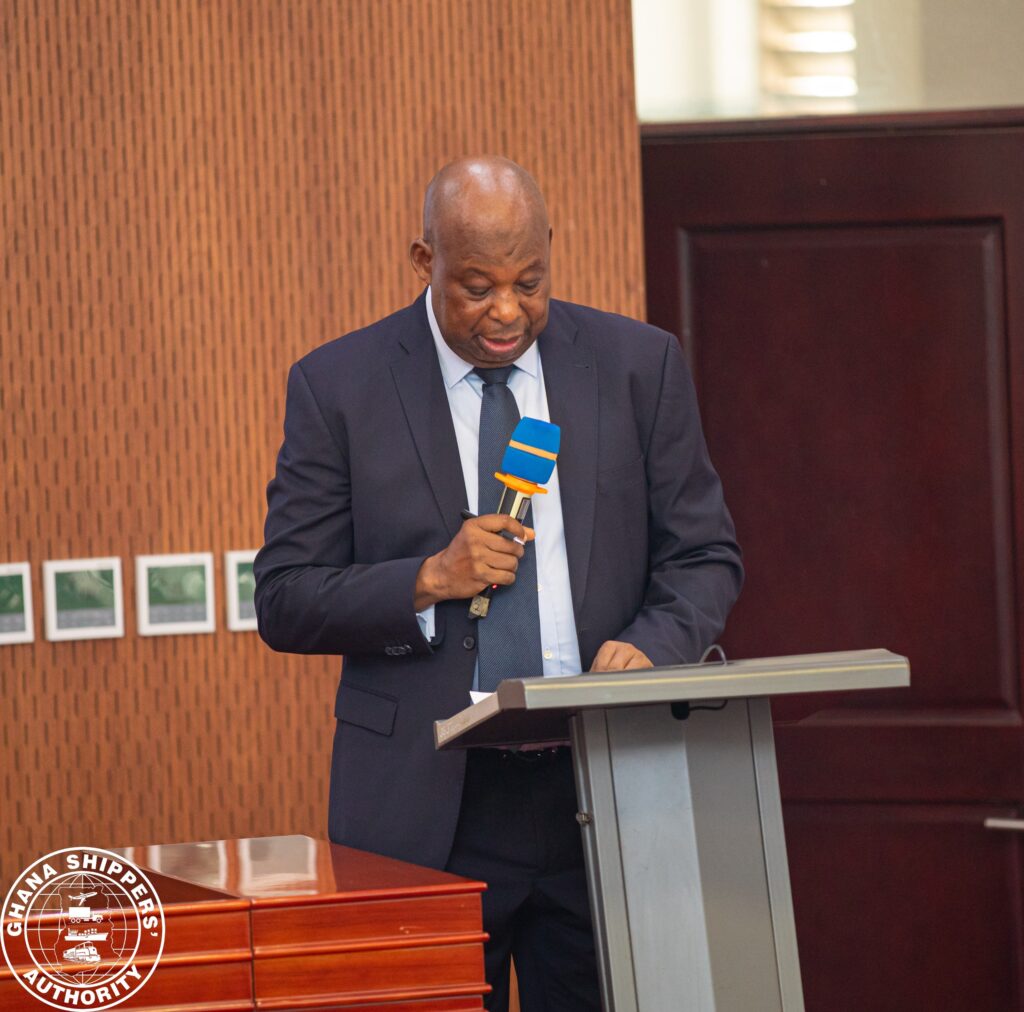 She further emphasised that efficiency must not come at the expense of fairness, and effectiveness must ensure that innovation within the commercial space does not outpace compliance with the law. These elements, she said, are necessary for the full realisation of the benefits of the 24 Hour Economy, therefore, the entire sector was looking up to the judges to play their sacred role impartially to not only meet the expectations of Ghanaian stakeholders, but most importantly, global stakeholders, as Ghana continues to works towards being the indisputable preferred international trade hub in the sub-region.
 On his part, Justice I. O. Tanko Amadu, Justice of the Supreme Court and Director of the Judicial Training Institute, encouraged the judges to take full advantage of the training to deepen their understanding of Maritime Law to ensure informed, efficient and consistent adjudication of maritime disputes.