

The Western Zonal Office of the Ghana Shippers’ Authority (GSA) held a Shipper Committee Meeting on Tuesday, 28th April 2026, at the Takoradi Shippers’ Centre, with a strong focus on sensitizing shippers on Local Cargo Insurance and its implications for trade.
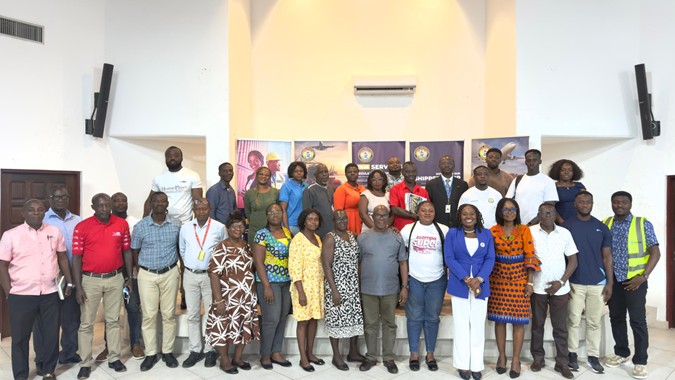 The meeting, which took place on Tuesday, 28th April 2026, brought together shippers, insurance companies, shipping line representatives and other industry stakeholders to deepen understanding of cargo insurance requirements and their implications for trade operations.
The session was designed to sensitize participants on Local Cargo Insurance and its relevance to risk management in international trade. The resource person for the engagement, Mrs. Gertrude Adwoa Ohene-Asienim (FICS), a maritime executive and consultant with expertise in marine insurance, maritime law and international trade, led the technical presentation.
In her welcome remarks, the Western Zonal Manager of GSA, Mrs. Agnes Asamoah Duku, explained that Government had issued a directive to make local cargo insurance mandatory for all imports. She stressed that the policy is aimed at protecting shippers from potential financial losses arising from damage or loss of cargo.
“Insuring cargo is essential, as it helps to mitigate potential financial losses to shippers in the event of loss or damage to cargo,” she said.
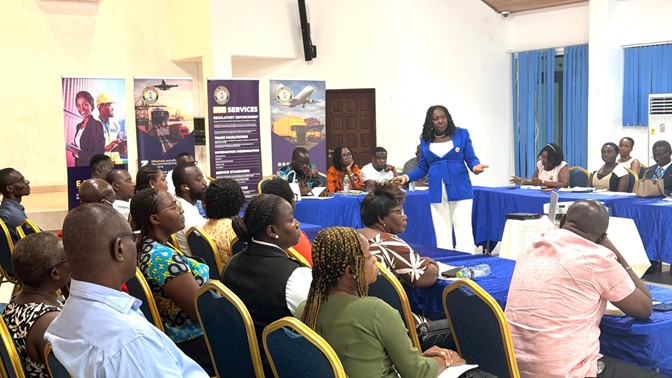 Mrs. Gertrude Adwoa Ohene-Asienim made an in-depth presentation on the legal framework underpinning the directive, drawing attention to the Ghana Insurance Act, 2021 (Act 1061). She explained that Sections 221 and 222 of the Act require all insurance risks arising in Ghana, including marine cargo insurance, to be placed with insurers licensed by the National Insurance Commission unless prior approval is granted.
She further clarified that all imported goods, apart from personal effects, must be insured locally through licensed Ghanaian insurers, adding that offshore insurance arrangements are not permitted under the directive. She also noted that the policy applies strictly to imports and not exports.
Mrs. Ohene-Asienim further outlined the relevance, benefits and obligations associated with cargo insurance arrangements and introduced participants to the various types of cargo insurance policies available to shippers.
She highlighted the Marine and Aviation Insurance Database (MAID), which is a web- based platform designed to record and report on all insurance policies within the marine and aviation sectors., Mrs. Ohene-Asienim described MAID as a key tool for improving transparency and compliance.
On the benefits of local cargo insurance, she noted that it offers value for money through proper risk coverage, competitive premium negotiation and the avoidance of unfavorable insurance terms imposed by sellers. She added that, local insurance ensures real protection against insured risks, enables faster claims settlement within Ghana, legal protection under Ghanaian law, improved communication with insurers, reduced foreign exchange exposure and avoidance of penalty charges ranging from 0.875 per cent to 1 per cent.
The presentation triggered an interactive question and answer session, during which shippers sought clarification on issues including the Marine Insurance Certificate required for Customs clearance, termination clauses in contracts of carriage and other misconceptions surrounding cargo insurance. Mrs. Ohene-Asienim provided responses which were well received by participants.
Participants expressed appreciation for the sensitization session and commended GSA for consistently providing platforms that deepen industry knowledge and compliance awareness.
Mrs. Agnes Asamoah Duku urged shippers to comply with the Government’s directive on cargo insurance, stressing its importance for safeguarding trade transactions and reducing exposure to avoidable financial risks.
The meeting recorded strong participation from stakeholders across the shipping and insurance value chain, a reflection of the growing interest in compliance and better risk management within the sector.